


Bushwick Inlet Park, Motiva Section
Bushwick Inlet Park's Motiva Section represents a key component of New York City's ongoing efforts to transform former industrial waterfront land into resilient - and welcoming - public green space. Located along the Brooklyn waterfront, the 31,500-square-foot site is part of a larger park redevelopment led by NYC Parks, with landscape architecture by Abel Bainnson Butz and installation by Family Tree Service.
Prior to the meadow installation, the site had experienced a failed seeding attempt and remained largely untouched. With other sections of the park nearing completion and opening to the public, NYC Parks needed a solution that could quickly establish vegetation, improve the site's appearance, and support the City's broader climate resilience goals.
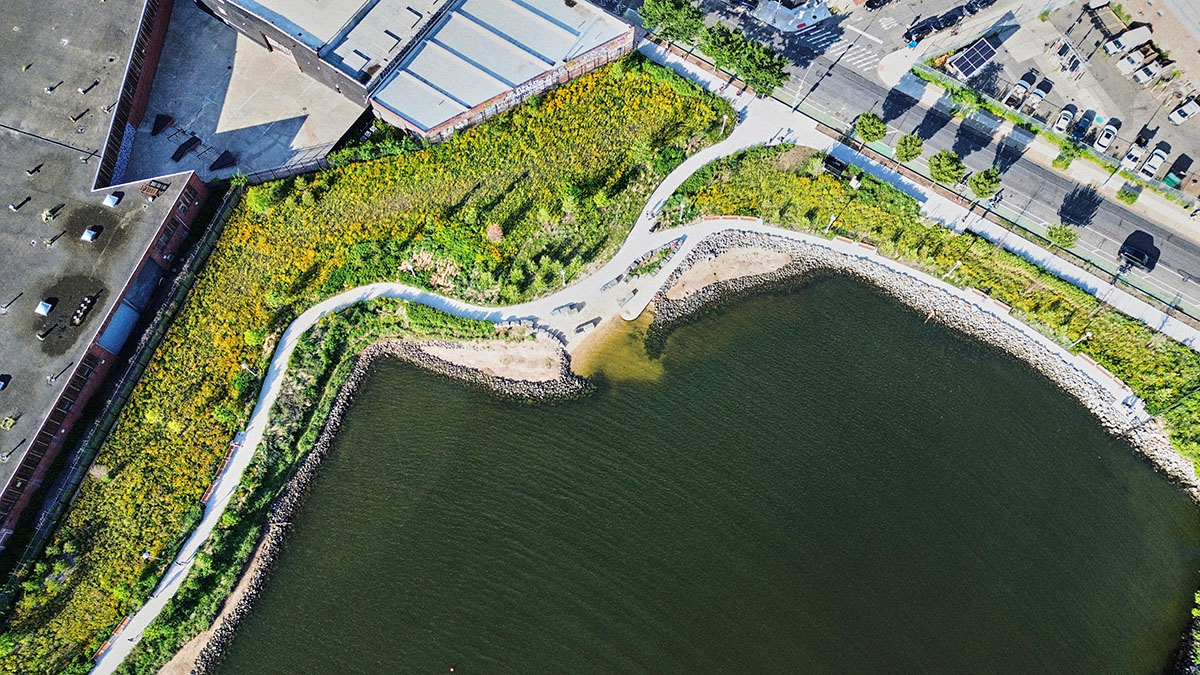
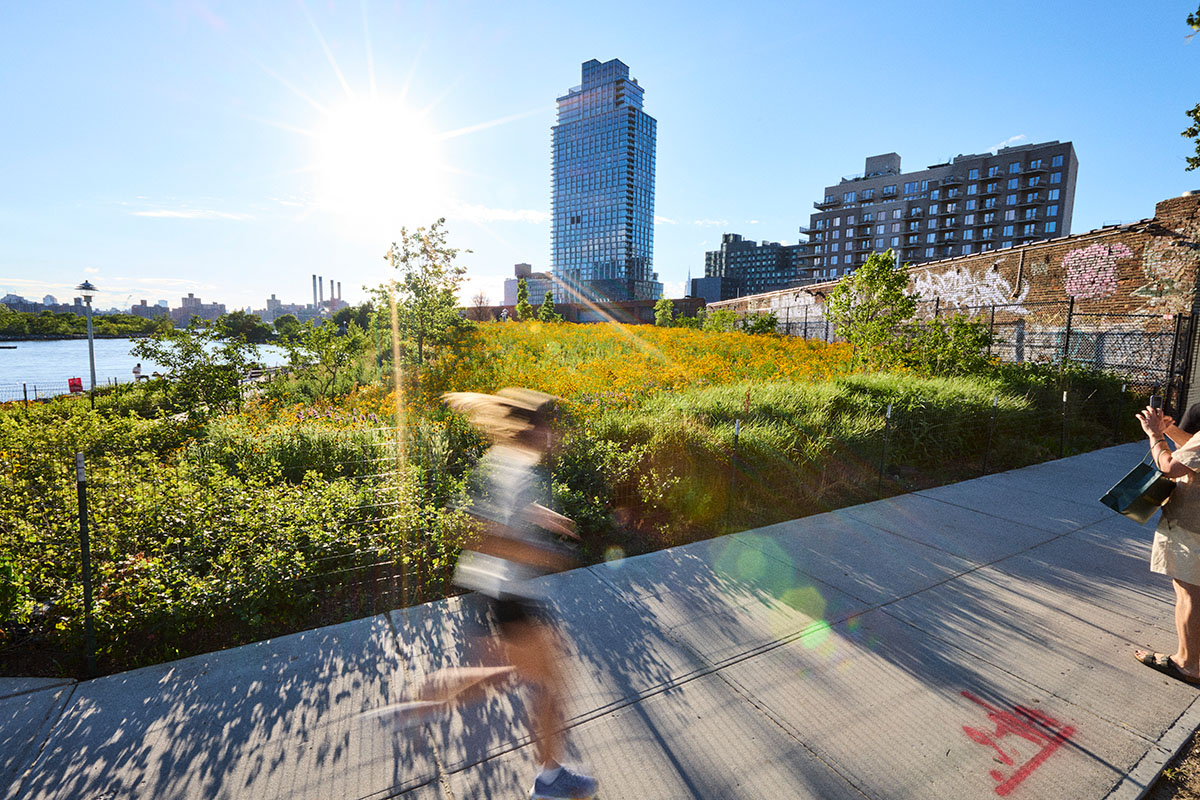
As a former industrial property, the site had undergone environmental remediation before being incorporated into the park. However, following the unsuccessful meadow seeding effort, establishing reliable vegetation remained a challenge. The exposed waterfront location also presented demanding growing conditions, including strong winds, salt spray and harsh winter weather.
To address these challenges, Meadow Lab supplied a combination of Signature Native and Signature Enriched Wildflower Sod®. The use of established native meadow vegetation provided immediate ground cover and eliminated the uncertainty associated with another seeding attempt.
Installation took place in November 2025. The contractor prepared the site, and a crew installed approximately 10,000 square feet of Wildflower Sod® per day over three days. Despite the project's scale, the installation proceeded smoothly and efficiently.
One of the key benefits to Wildflower Sod® is the instant vegetative cover it provides - helping stabilize the site while suppressing weeds. While the Wildflower Sod® was largely dormant throughout the winter, by the time the park opened in May, the meadow had developed into a vibrant planting that delivered seasonal color, habitat value, and pollinator resources.
Beyond its visual impact, the meadow contributes to the long-term ecological goals of the park by supporting biodiversity, improving soil health, and creating a resilient landscape capable of thriving in a challenging waterfront environment.


