


Riverside Park, West Harlem Drive Meadow
Along the West Harlem Drive bike path in Riverside Park, a steep slope had become heavily infested with Japanese knotweed, one of the most persistent invasive plant species in the northeastern United States. After years of management efforts, including metal mesh installation and two years of solarization, the Riverside Park Conservancy was ready to restore the site with native vegetation.
In October 2025, the Conservancy installed 1,250 square feet of Meadow Lab Wildflower Sod® as part of a pilot project to evaluate how a mature native meadow could provide immediate ground cover following suppression treatment while supporting long-term ecological restoration.
The project site presented a unique set of challenges. The sloped terrain required a planting solution capable of establishing quickly and resisting erosion, while nearby knotweed populations continued to exert pressure from both sides of the restoration area.
As the site entered its restoration phase, the Conservancy selected Meadow Lab's Signature Native Wildflower Sod® to establish native vegetation on the slope. Unlike conventional seeding approaches, the mature vegetation provided immediate ground cover following invasive species suppression, while its dense root system helped stabilize the slope and quickly establish a native plant community.
The sod was delivered to a nearby staging area and installed by Riverside Park staff alongside volunteers. Landscape pins were used to secure the sod across the slope, ensuring good soil contact and stability. After years of preparation and invasive species management, the installation itself proceeded smoothly and efficiently.
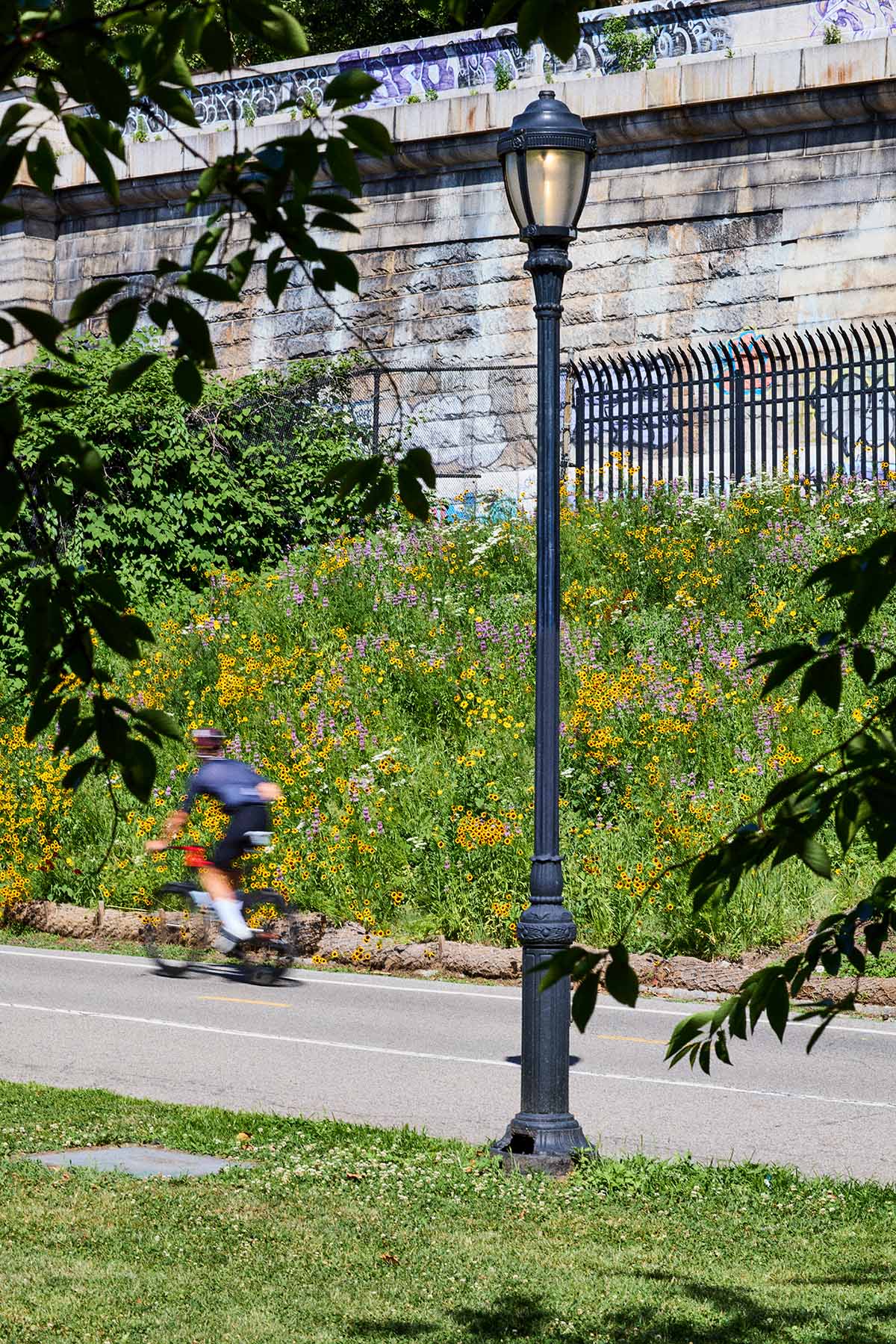
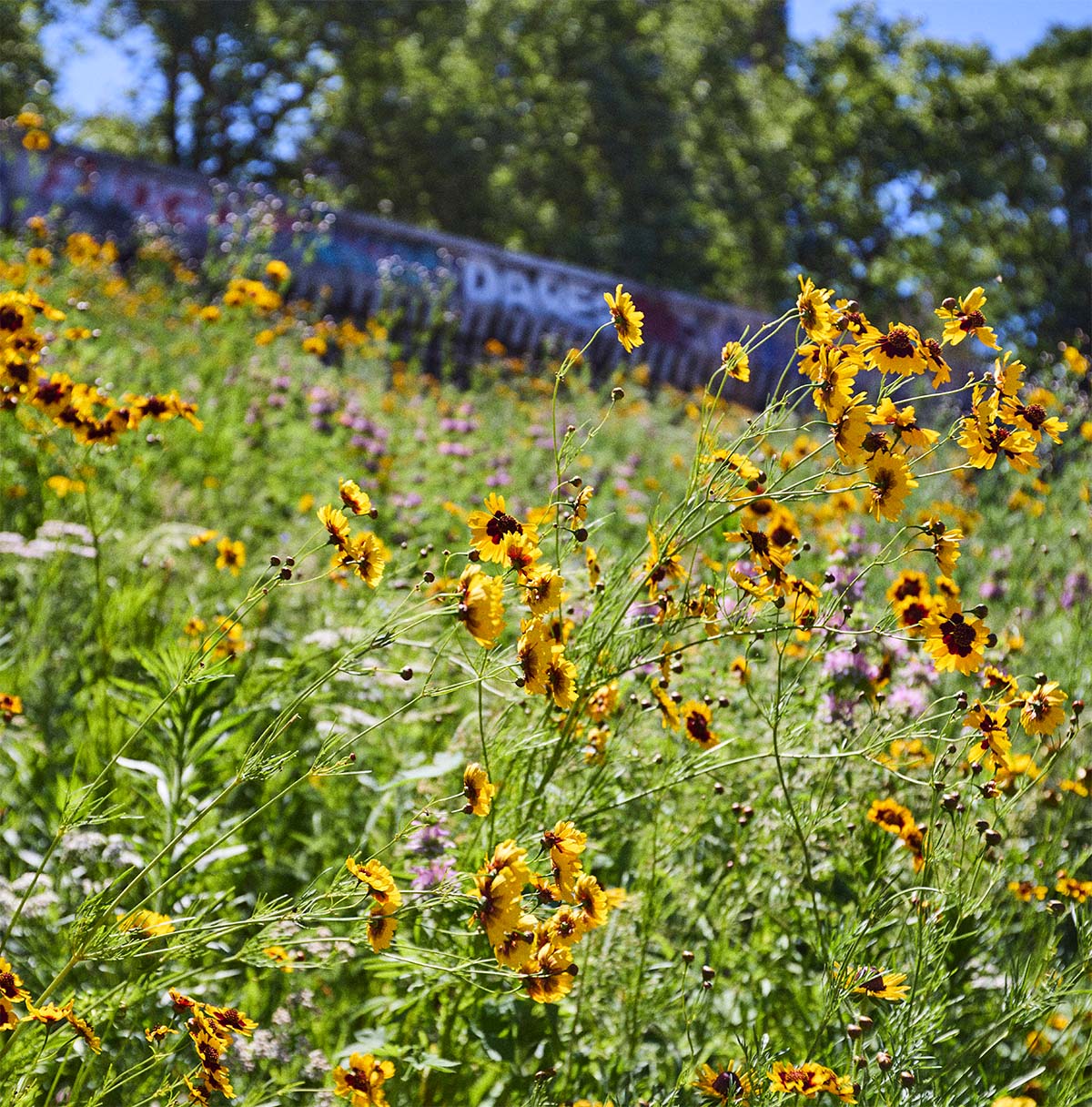
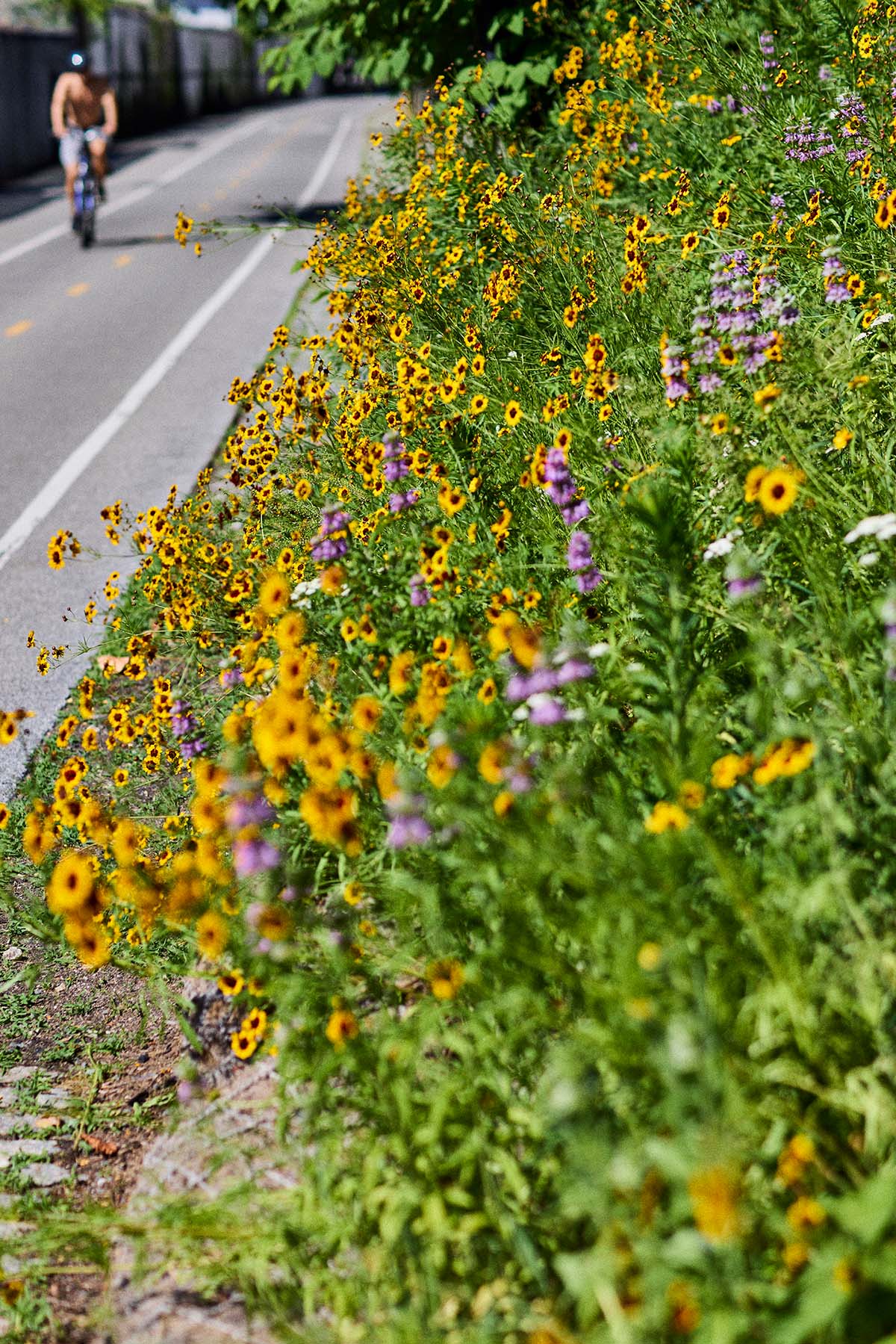
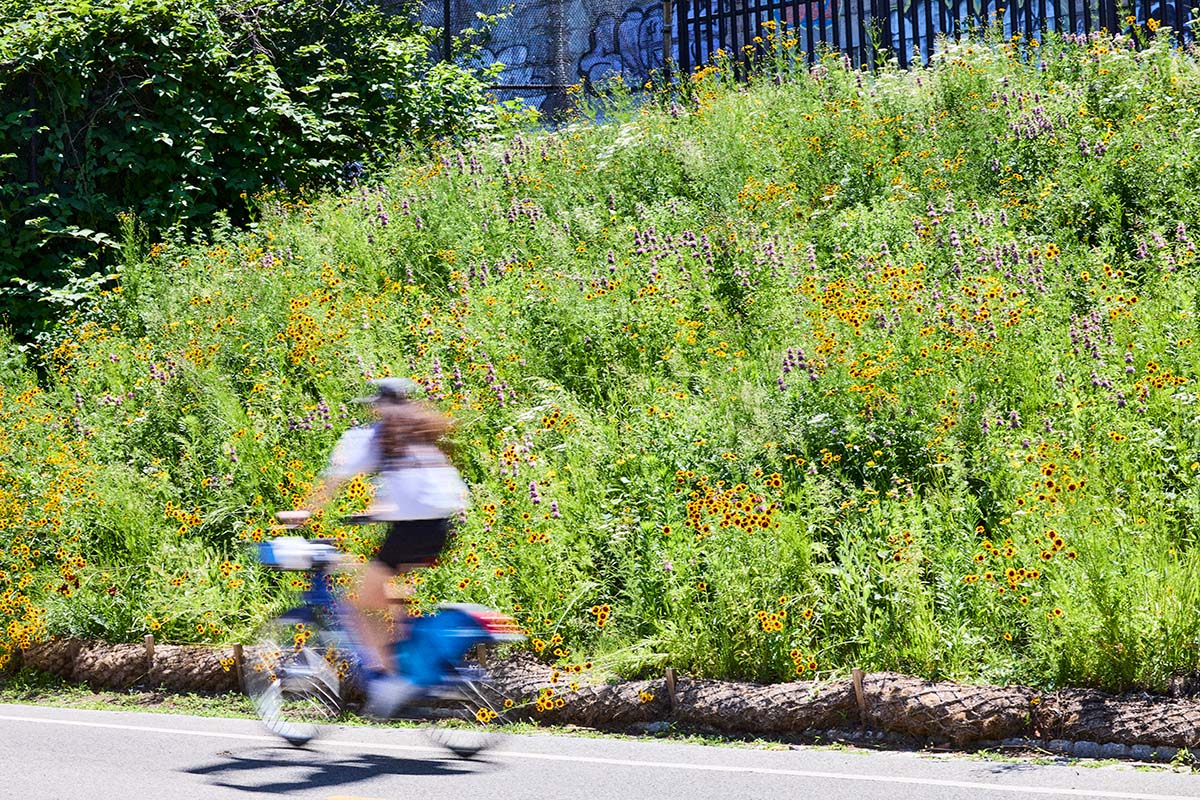
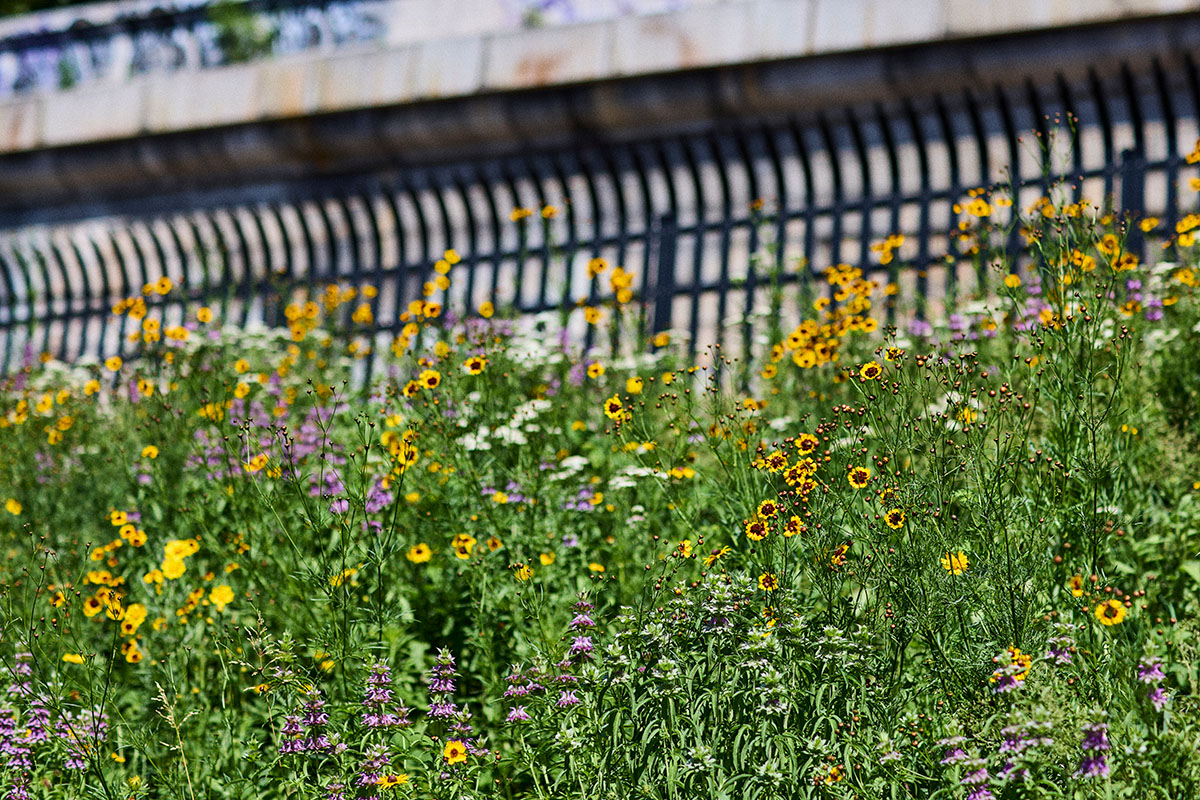
Since installation, the site has transformed into a thriving native meadow, bringing seasonal color and valuable habitat to a previously degraded area. The dense vegetative cover is helping stabilize the slope while providing immediate ecological benefits following invasive species suppression.
While long-term data on knotweed suppression is still being collected, early results are encouraging. The meadow has established successfully, is flowering vigorously, and is providing continuous native ground cover across the restored area. Researchers continue to monitor whether the established meadow helps reduce knotweed reemergence over time.
The project demonstrates how mature native meadow systems can be integrated into restoration strategies following invasive species management, creating opportunities to reestablish native plant communities in challenging urban environments. Encouraged by the initial results, the Riverside Park Conservancy hopes to continue incorporating native meadow plantings into future restoration projects throughout the park.
Today, the site serves as both a restoration project and a living demonstration of how native meadows can help reclaim challenging urban spaces while supporting biodiversity, slope stabilization, and ecological resilience.
To view a video on how the site was prepared and installed, visit @riversideparknyc


