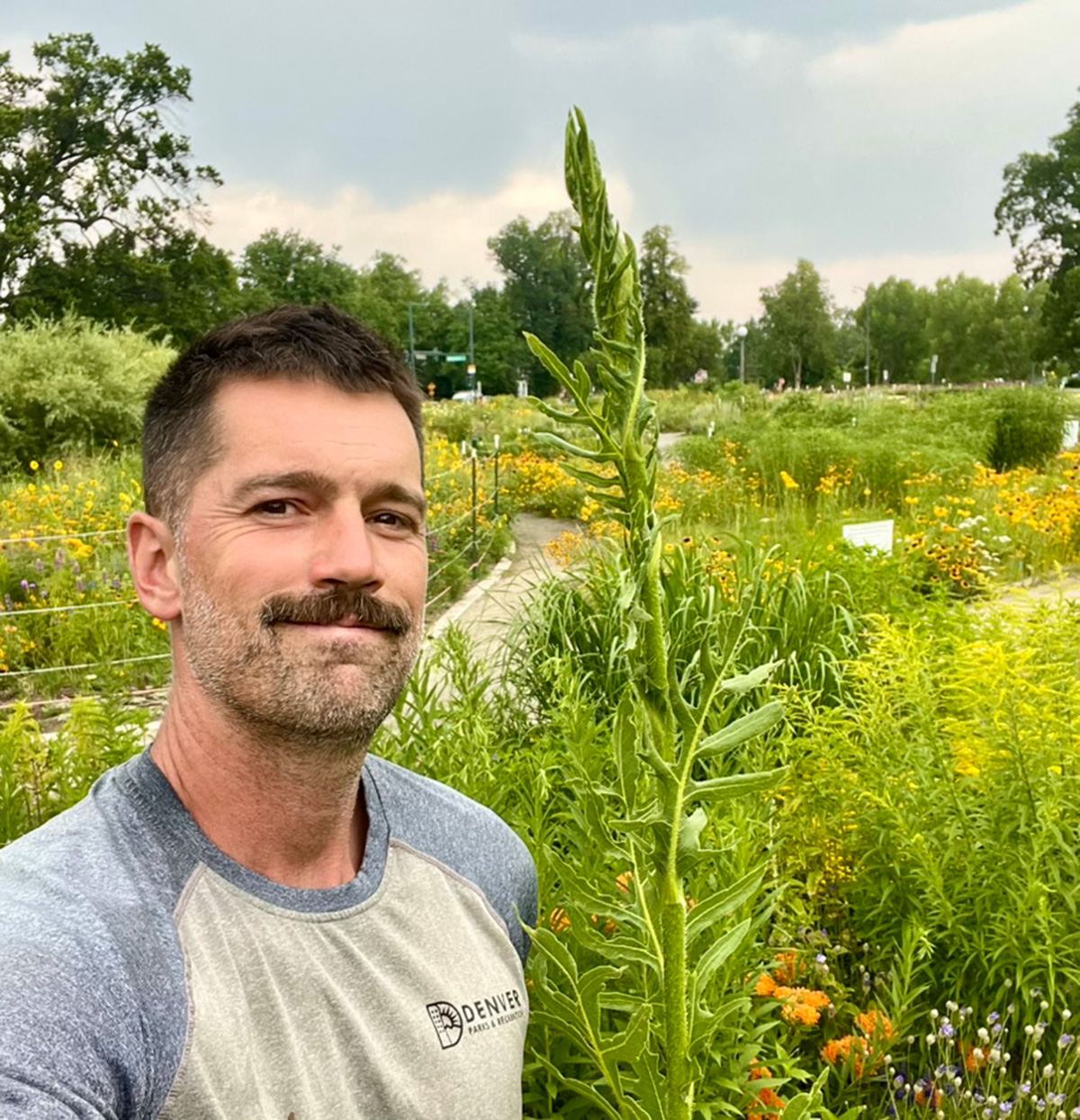
Field Notes: Skyler Smith of Denver Parks & Recreation
Skyler Smith on transforming a three-acre Denver public garden from annual display to native habitat.
Over the past five seasons, Skyler Smith has been reshaping a three-acre garden in Denver’s Washington Park—moving it away from a largely annual display and toward a more native, perennial habitat garden. A Denver native who grew up on a small farm west of the city, Skyler developed an early connection to the outdoors and to the idea of caring for land over time. After college and graduate school, he returned home and now works for the City and County of Denver, where his approach blends ecological thinking with the realities of maintaining a highly visible public garden. His plantings combine plugs and seed in matrix-style arrangements, supported by a turf-removal and site-preparation process designed to speed establishment and reduce weed pressure.
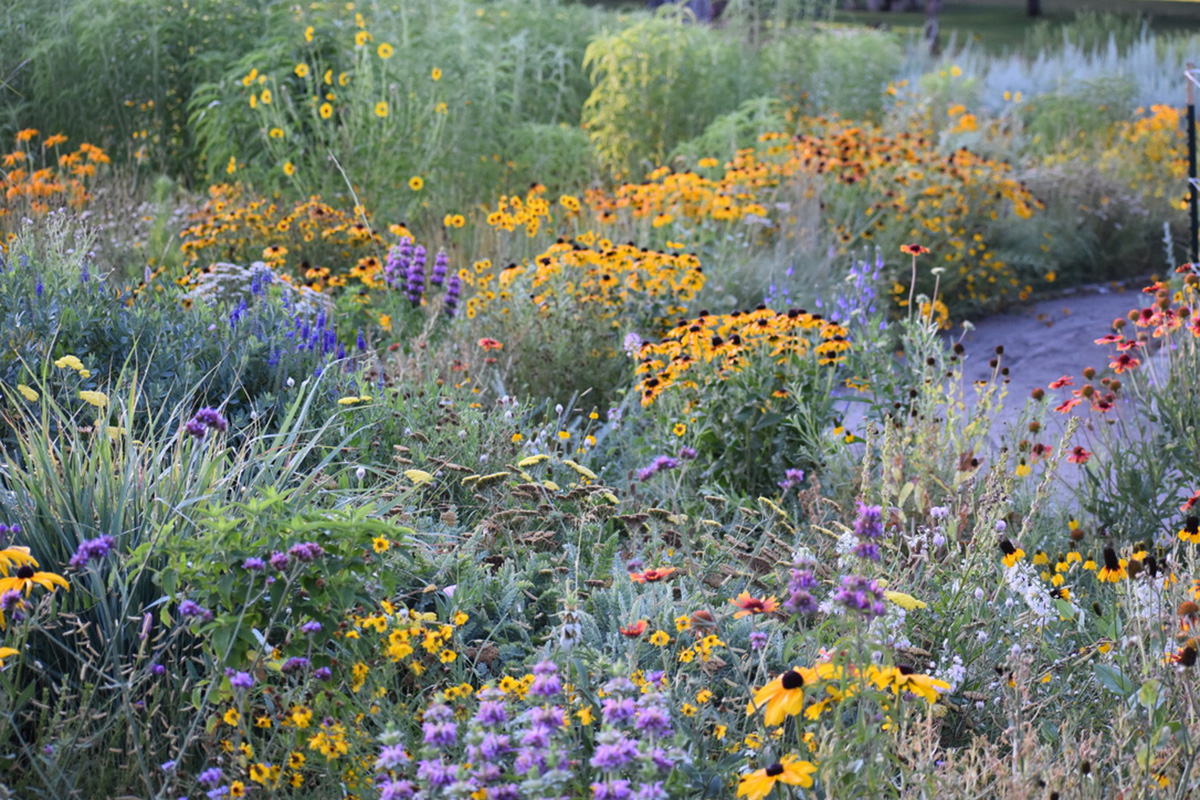
As more parks embrace native plant communities and lower-input landscapes, what changes have you noticed in how people respond to them? What tends to win people over—and what misconceptions still persist?
I have actually begun to get almost entirely positive feedback on this, but it did take 3-4 years for that to happen. Initially, people were very skeptical of the move from mostly annual beds to native perennials because they thought it would look messy or be less colorful.
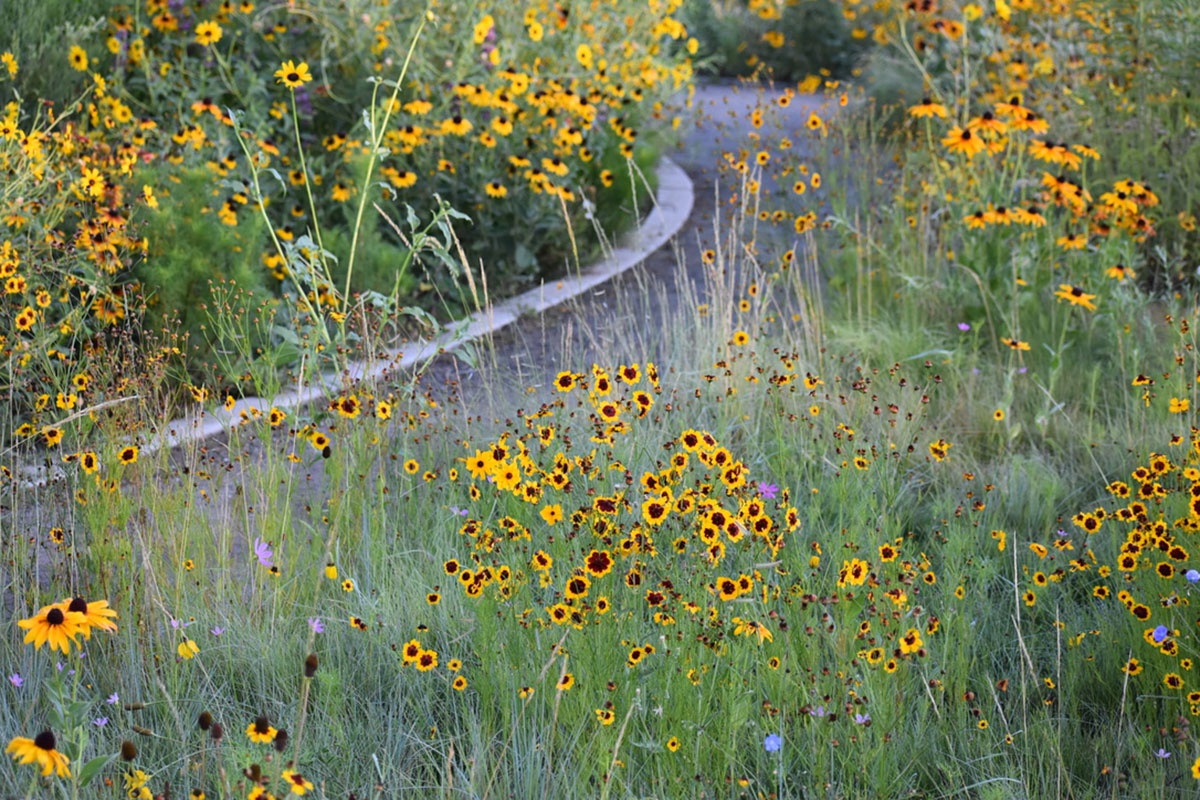
And while it is definitely a wilder look, it seems most people really enjoy the textures, colors, and seasonal changes that come with a more natural, perennial garden. Another thing that has really won people over is the increase in pollinators and birds. I have seen huge increases in foot traffic in the gardens, and a lot of that is from birders and pollinator enthusiasts.
The ecology of Colorado's Front Range is very different from the lush meadow systems many people picture when they hear the word "meadow" — and certainly the meadows that we’re installing out east. How do you describe the character of Western grasslands and native plant communities to people who may not be familiar with them?
Colorado is much drier, but it doesn’t necessarily mean it’s not lush. The grasslands out here, when healthy, are a very nice, soft green in the late spring and early summer and then turn to beautiful shades of straw, red, and even purple into the late summer. I tend to use a more “mixed-grass” prairie palette here that includes many species common farther east, such as big bluestem, little bluestem, switchgrass, etc. These species are all still pretty common even out here, and combined with the shortgrass species, they make a very nice matrix for a native garden.

Water shapes nearly every planting decision in the West, but it's only one part of the story. How does Colorado's climate influence the way you think about planting, species selection, and long-term management?
Water is a big part of the picture out here, but variability is an even bigger component. We have had some very wet springs recently that led to great establishment, and then last winter and spring were really hot and dry, with some late, surprise deep freezes. I just have to throw a lot of plants into the mix and be okay with the fact that some of them can’t handle those kinds of swings. I have been pleasantly surprised by how tough a lot of these plants are.

Experienced land stewards often notice things that most of us walk right past. When you visit a landscape for the first time, what are the first signs that tell you whether it's functioning well ecologically?
I am always looking for all of the components of the “food web.” We all see the butterflies and bees, but are there spiders, beetles, and praying mantises? And is there diversity? I always love to see tons of different species at each trophic level, and that shows that things are working ecologically. It also tells you that the land steward probably doesn’t need to worry much about pests or disease.
If you could change one assumption people have about how we manage public landscapes, what would it be?
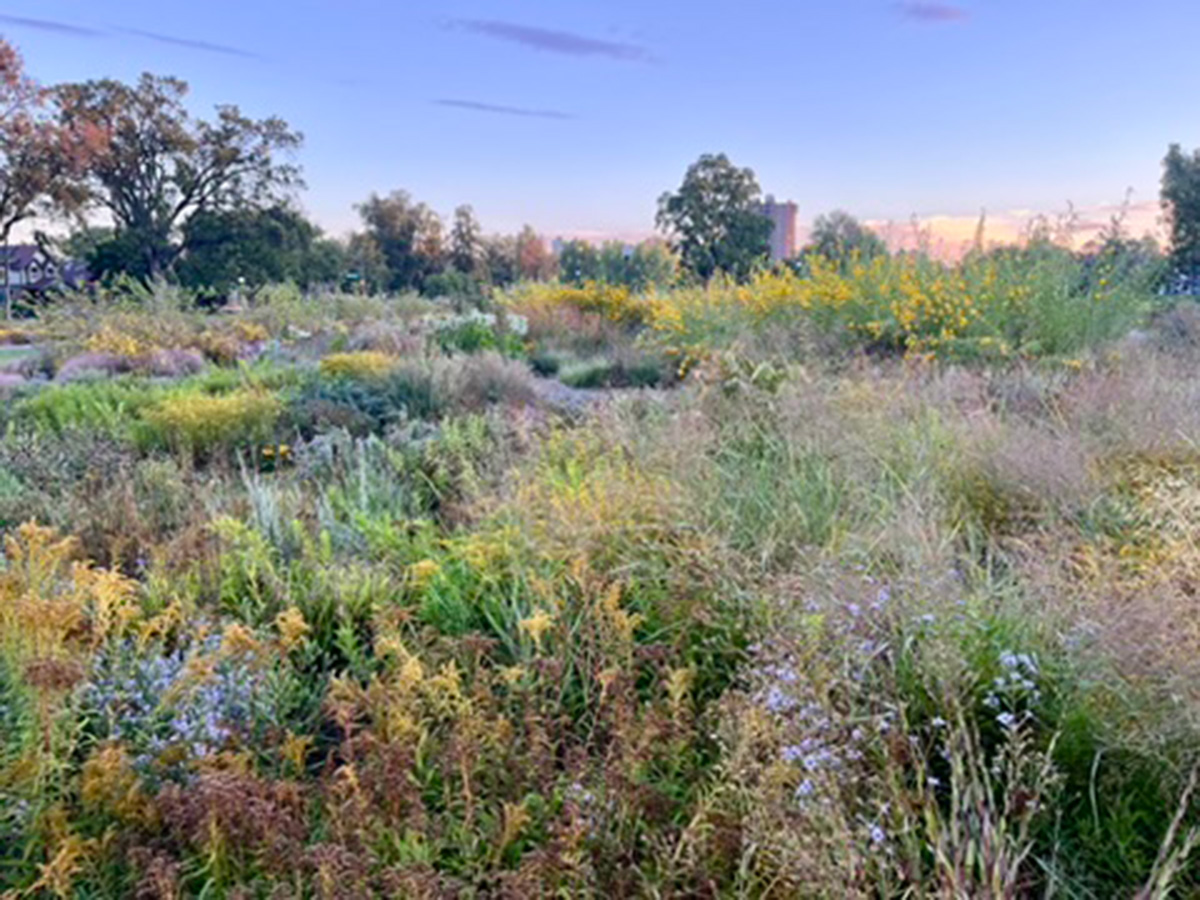
Especially in an urban setting like mine, these landscapes are still very highly managed. There is a misconception that native and perennial equals low maintenance. And while it’s true that there are fewer inputs in the form of water, fertilizer, chemicals, etc., there is still a ton of work that goes into keeping invasive species out and maintaining a balanced, visually appealing result.
Your work sits at the intersection of horticulture and ecological stewardship. How has your ecological background shaped the way you approach horticulture, and how has your understanding of working with natural processes evolved over time?
My schooling background is entirely in the ecology/biology realm, and I have sort of learned the horticulture and design part as I go. I approach the whole thing as an ecological restoration project, so I try to think of it all very holistically. Fortunately, I didn’t come from a formal horticultural background, and my goal was basically to turn a 3-acre annual garden into a prairie, so I didn’t have a lot of the traditional hang-ups that some longer-term horticulturists have.

The concept of “plants make the best mulch” was extremely intuitive to me from the start, but over time I’ve really come to understand that the more densely I plant, the less I have to weed. Then I get to spend more time editing and shaping the planting, which is the fun part. Sometimes I really have to step back and remember that people expect it to be a public garden, so I need to look at details, color balance, and sight lines. I’m shocked by how often these things just spontaneously sort themselves out in a chaotic, diverse garden, but I still have to pay attention to them.