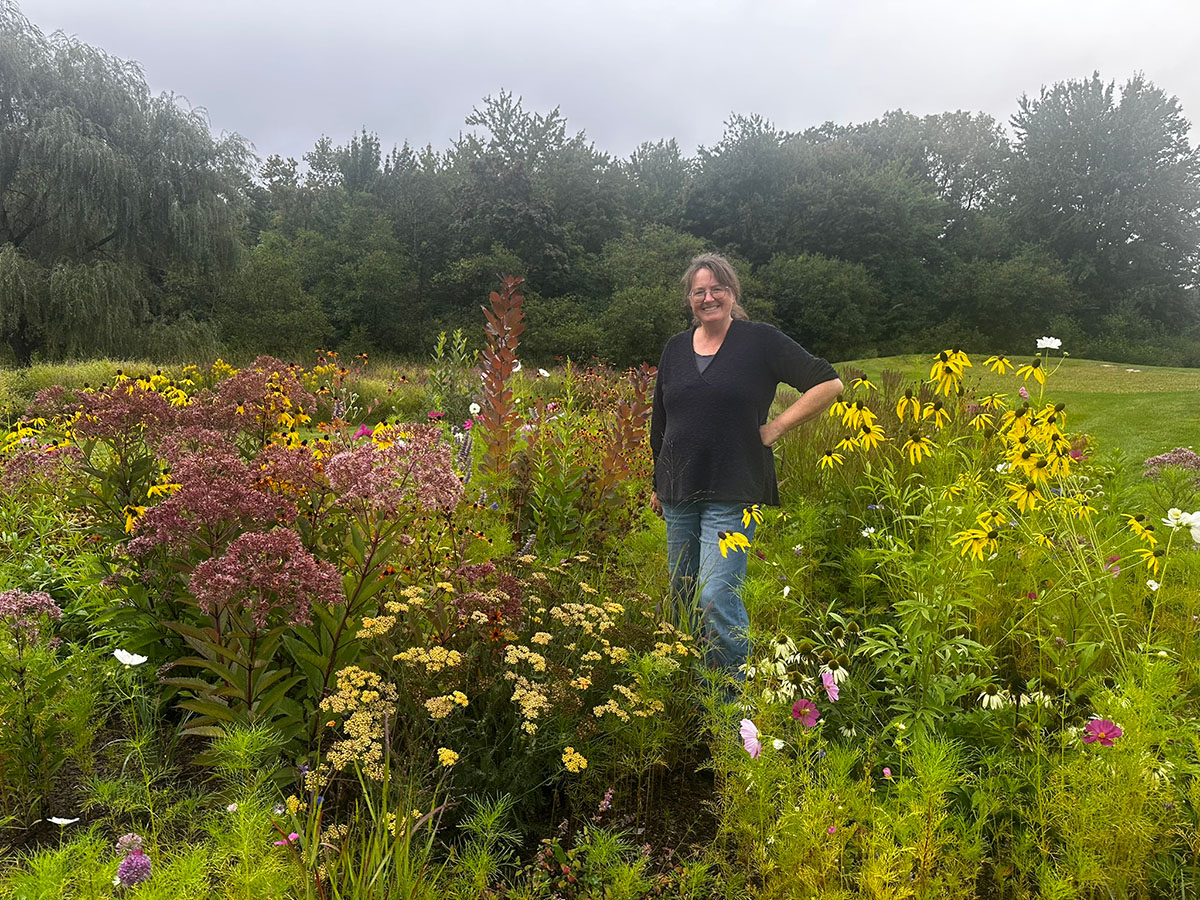
Field Notes: Liz Kelly of Hudson Garden Studio
Liz Kelly on learning from meadow setbacks, balancing composition with natural process, and finding beauty in seasonal change.
For Liz Kelly, founder and lead designer of Hudson Garden Studio in Cold Spring, New York, meadow design begins with understanding the landscape already there. With a background in art and landscape architecture, Liz creates gardens and master plans for homes and cultural institutions, primarily in the Hudson Valley. The studio’s small team designs, installs and maintains gardens, staying close to the plantings and learning from how they develop. That experience informs two distinct approaches to meadows: improving the ecological diversity of existing old fields and creating more composed meadow gardens, often planted with plugs in place of lawn. In this conversation, Liz reflects on learning from setbacks, finding beauty in seasonal change and making gradual gains in biodiversity through observation and care.

What’s a misconception people have about the “wildness” of meadows? Where do you see the balance between design and natural process?
I feel like there are nothing but misconceptions when it comes to meadows. Early in my landscape practice, I, like many, was seduced by gorgeous images of meadows. When I started practicing in the Hudson Valley, I came across many sites that were open fields, where it seemed to be the obvious move to create a prairie-style meadow. However, what I came to realize is that this vision of a meadow is rooted in the true American prairie of the Midwest and is appropriate as loose inspiration, not as a direct analog.
While I initially sought to create a prairie meadow, the soil conditions and historic uses are very different. In the Hudson Valley, the vernacular landscape that has evolved here is a farming landscape. I find it more productive to think of these “meadows” more as “old fields” with generations of European grass seed mixed in with invasive annuals and perennials, as well as with competitive native wildflowers. The native wildflowers that are found are typically generalist species, thriving in a wide range of conditions while not providing the niche benefits of specialist species.

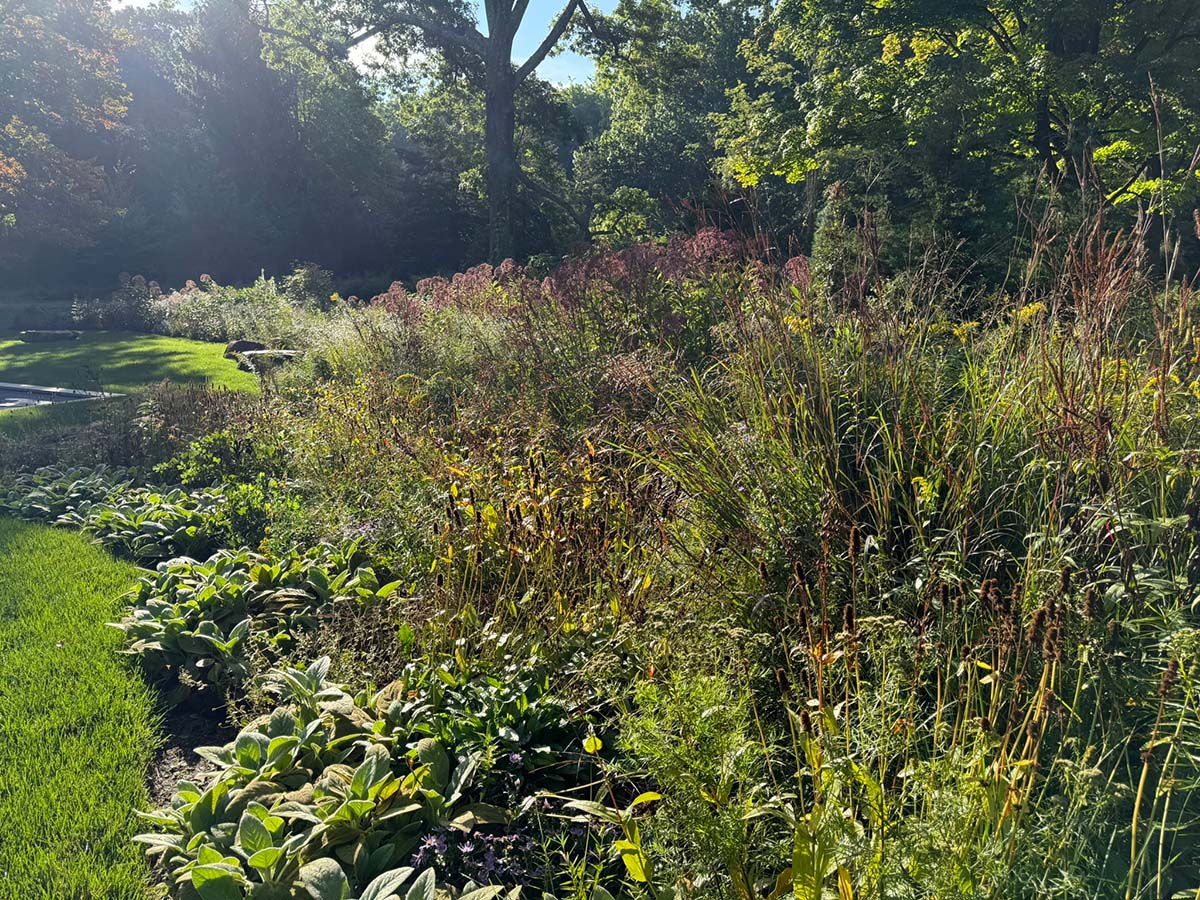
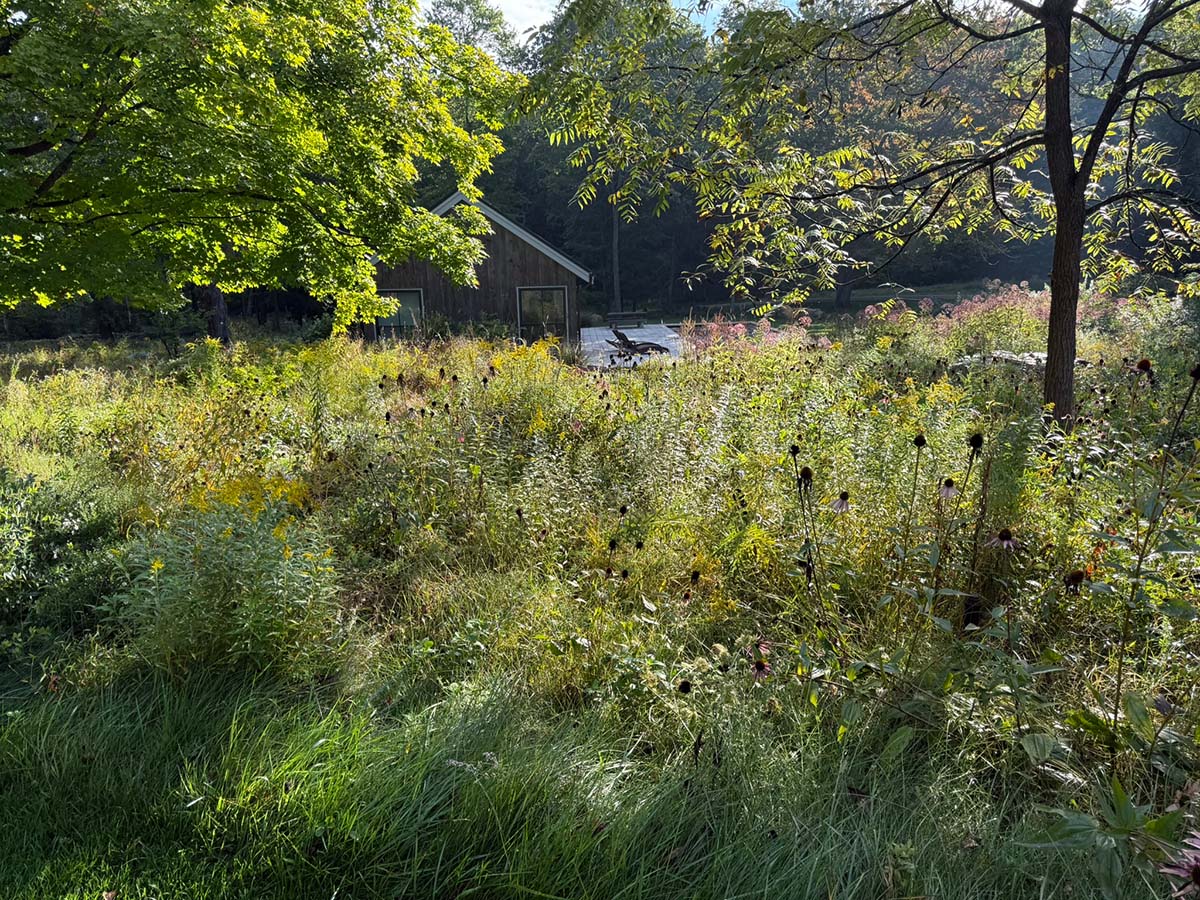
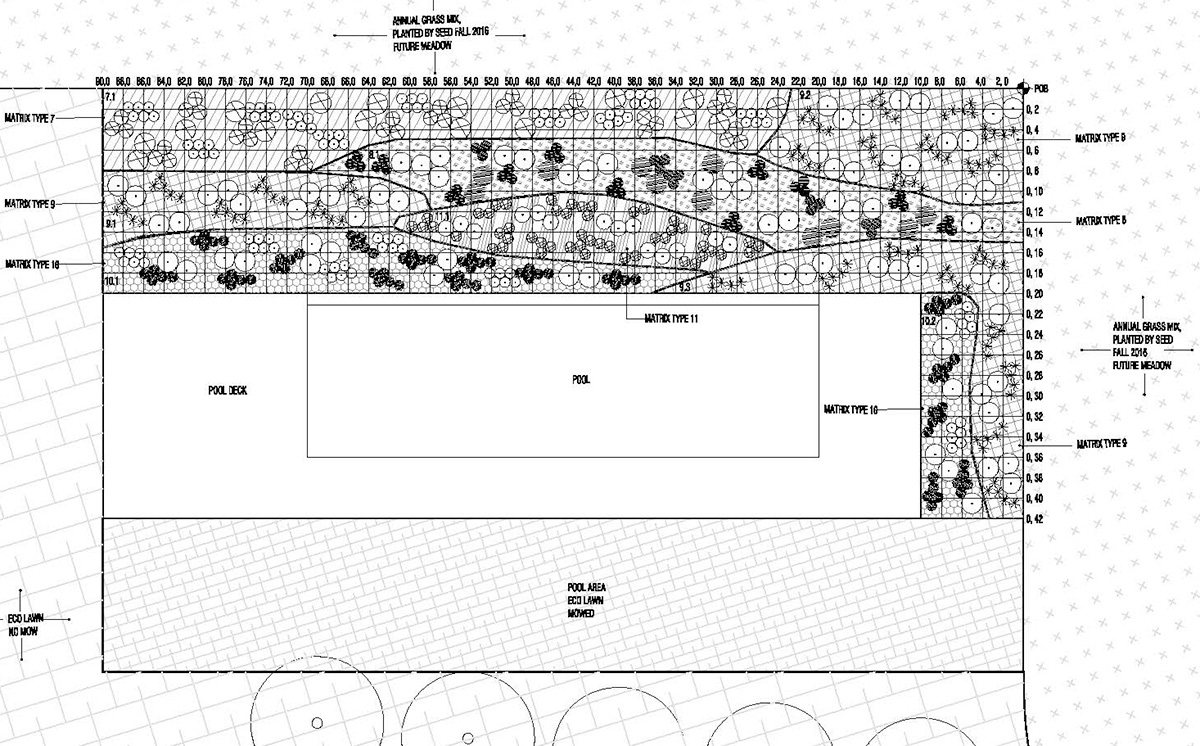
This led me to two landscape types that I often include in my design work. The first is Improved Old Field, which focuses on improving the ecological value of an old field. The second is the Meadow Garden. Meadow Gardens are smaller, more composed versions that take aesthetic inspiration from the Midwest prairie. These gardens are highly controlled at first, with clearing and planting from scratch, typically with a mix of grass, sedge and herbaceous plugs. We design these gardens with a lot of diversity and let the plants fight it out over time. Meadow Gardens require regular maintenance and weeding, especially in the first 2–3 years. A more or less stable community emerges over the long term. So natural process is the rule, but we are watching the ecological dynamics closely and manipulating a bit as we go. These gardens have dual purposes of promoting biodiversity and achieving the romantic aesthetic of a loose meadow. In the Meadow Garden, we are more likely to manipulate the plantings to achieve the visual and sensory effects that we want. I feel like when these gardens are successful, they have a lot of energy.
Tell us about a meadow that didn’t go as planned. What happened—and what did it teach you?
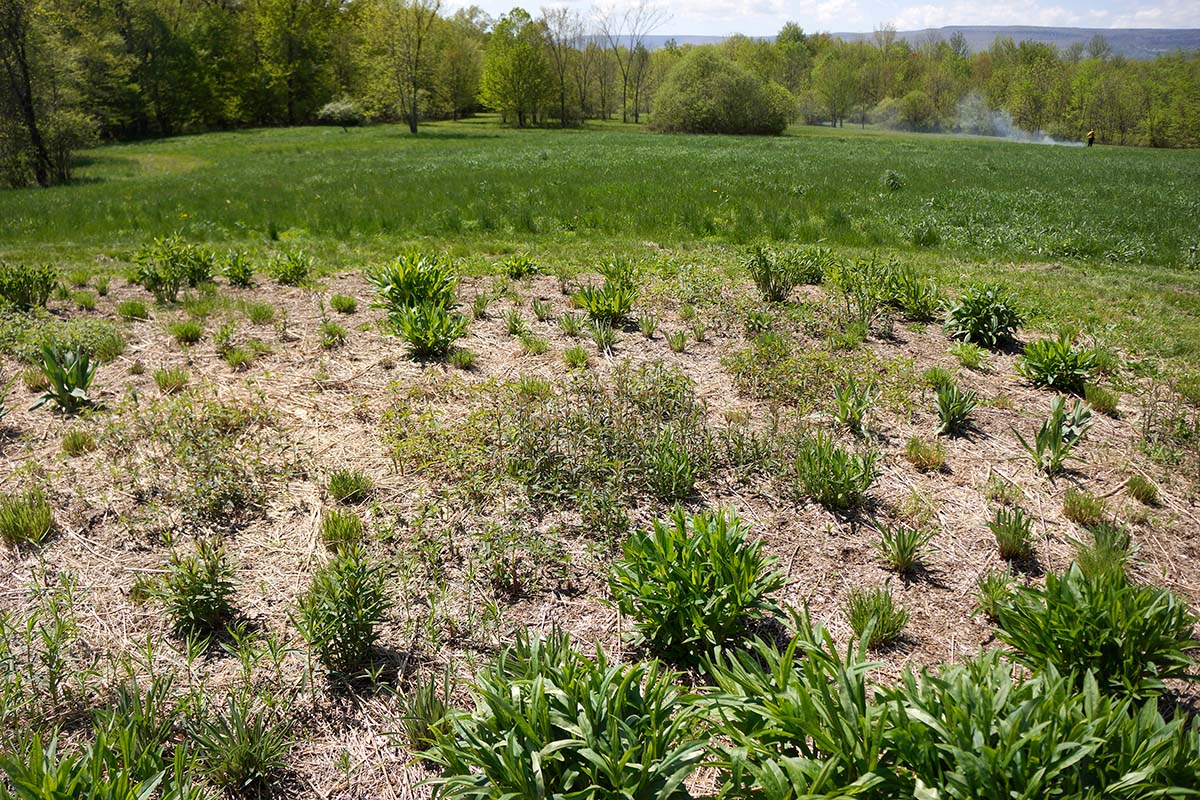
The first Hudson Valley meadow that I worked on was one of the “Old Field” situations I described. There were a lot of cool-season European grasses in the meadow, which we tried to reduce with a controlled burn. Unfortunately, it was a wet spring, and the green foliage that had already emerged early was resistant to the fire, so it was more of a “Controlled Smoke.” I think this led me to a bit of an “if you can’t beat them, join them” attitude. Or not really join them, but realizing that invasive species are not zero-sum. If you have invasive species, it’s not a failure; it’s just a condition to improve.
I learned to keep my eye on the prize, which is biodiversity, supported by plant diversity. You are doing good when you can increase the plant diversity in the space you are working. Improvements are the goal. It was also a reality check on just how challenging site conditions are, especially in this region with excessive invasive plant pressure. Sometimes the best approach is to introduce competitive generalist species into a tough situation and look for gradual improvement over time. Progress over perfection.
Is there a plant that completely changed your opinion over time? How did your relationship with that species evolve?
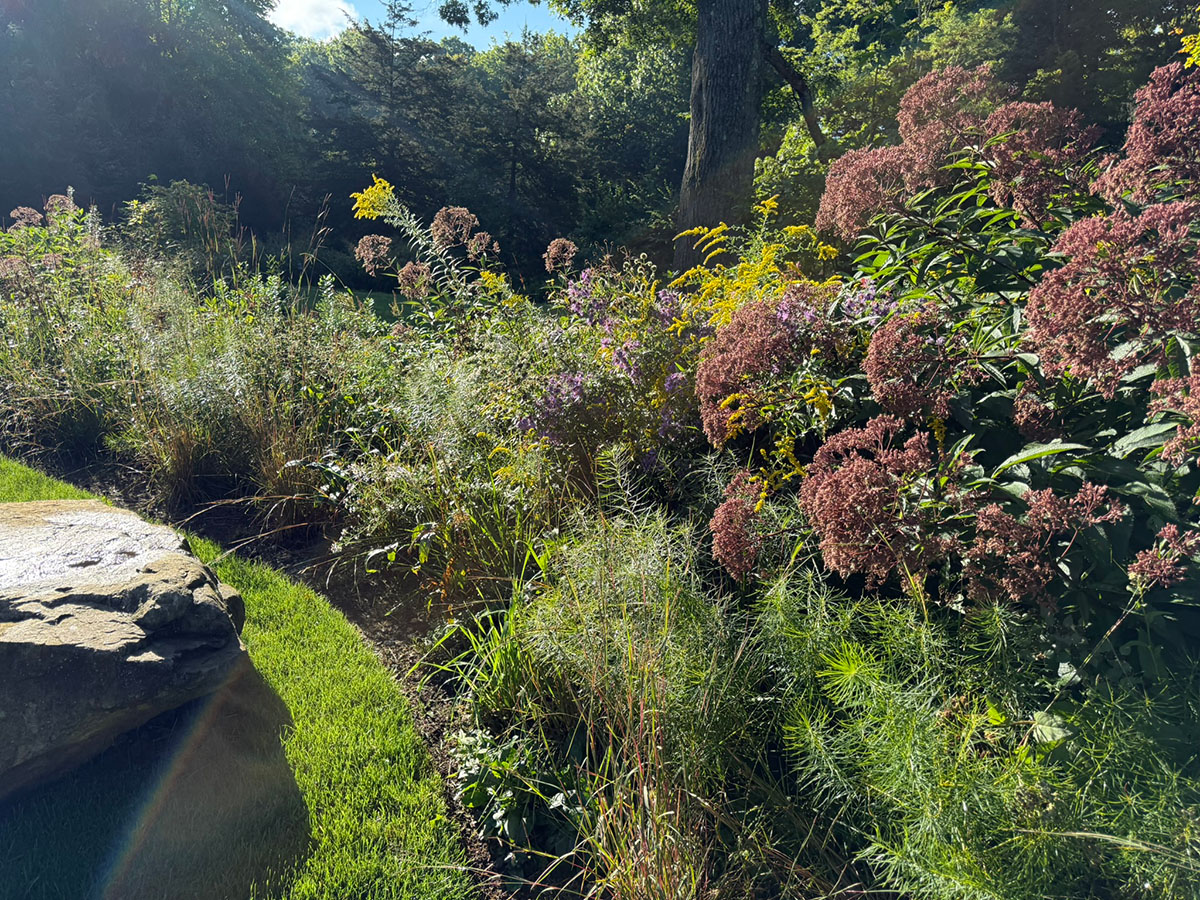
The plants that jump to mind here are the ones that I planted in the early days in meadow gardens that turned out to be very aggressive and that I have regrets about. Carex flacca 'Blue Zinger' and Symphyotrichum oblongifolium 'October Skies' have proved to be thugs in a couple of my earlier gardens. That has definitely made me more attuned to underlying conditions and making sure that I am always taking into account conditions that might favor some of these plants. On a more positive note, when I first started working, I thought sumac was very ugly and weedy. I would always give one of my colleagues the stink eye when he suggested including it in a design. But now it is one of the plants that I most love to see in the landscape, especially in the fall with its gorgeous color and form.
If you could freeze a meadow at one moment in the year, when would it be?
While I do think the best thing about landscape is how it changes, my answer to the question is definitely fall. The colors in fall contrast yet meld together in a way that I find deeply satisfying. I love the strong color and bold form of the plants in senescence. The structural aspects of plants in senescence work beautifully with the fall-blooming plants, creating painterly, moody compositions.
What’s something a meadow reveals about place that a traditional landscape might hide?
Meadows can provide an ecological lens on a place to those adept at reading plants. Looking at what plants thrive in specific areas of a meadow says a lot about water infiltration, soil nutrition and other site conditions. Personally, I find these kinds of observations very satisfying as I have more of them with additional knowledge and experience. It feels good to connect the dots!
But perhaps of greater value is the role of the meadow within our cultural vocabulary of landscapes. I find that meadows and meadow gardens emphasize the wildness of a place and put it on display. They straddle the line between ordered and uncomposed in a really pleasing way. Traditional landscapes can do this also, but with more emphasis on control and structure. When we make meadows, we are signaling that we are open to nature and the unexpected, to change that we can celebrate.
When you think about the future of meadows in the built world, what feels realistic—and what still feels out of reach?
The most difficult aspects of making more meadows in the world are site prep and maintenance. It remains difficult to convince clients to adequately prepare sites and to commit the long-term resources needed to maintain them. Some of this is due to the lack of detailed knowledge about what it takes to maintain a landscape, and some is a diminishing of the culture of care that is endemic in the US. In my experience, I find that most people did not grow up with grandparents and parents who regularly gardened or otherwise tended to the landscape. These are deep cultural markers. I have clients from the UK who say they know nothing about plants but then can go out into their garden and name every plant and when it comes out. I have yet to have this experience with American clients. This is my own experience as well, and both of my parents studied landscape architecture. It was not until I moved up to the Hudson Valley and began my practice up here that I could really go into the landscape and understand what I was seeing around me. There is always more to learn, and there is great joy in making connections in the natural world.
I think many people are opening up to these experiences and seeking connections to nature. More and more people want to plant native plants and are curious about what it takes to do so successfully. Thankfully, it feels like a growing movement. There are many synergies in the professional design and horticulture communities to support this. The more native and pollinator plants that are out there in gardens, the more biodiverse they are and the more species they will support. There is direct impact, and I am a big believer in the power of many small actions to achieve compounding ecological benefits. The main thing is to keep our eyes on the prize: biodiversity.
To explore Liz Kelly's work and get in touch, visit her website at https://www.hudsongardenstudio.com/